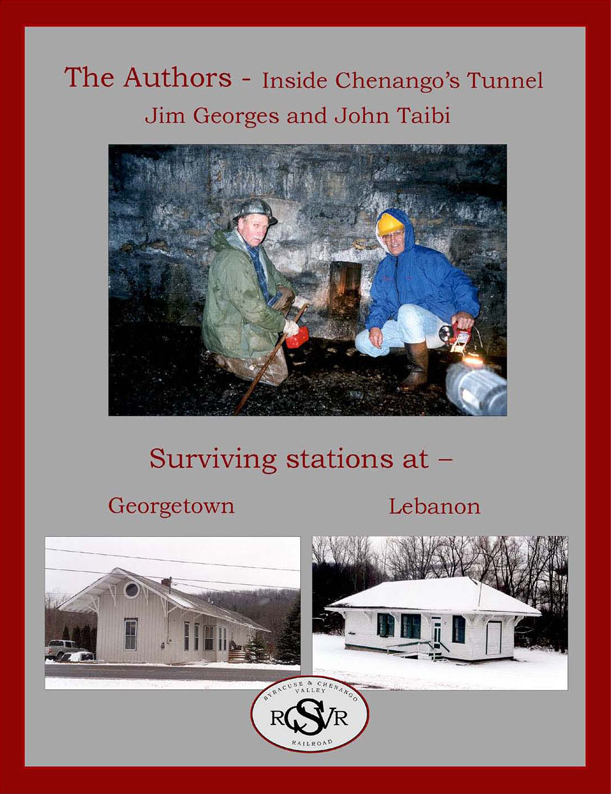
The Ontario & Western Railway Historical Society’s 2009 Observer is Here.
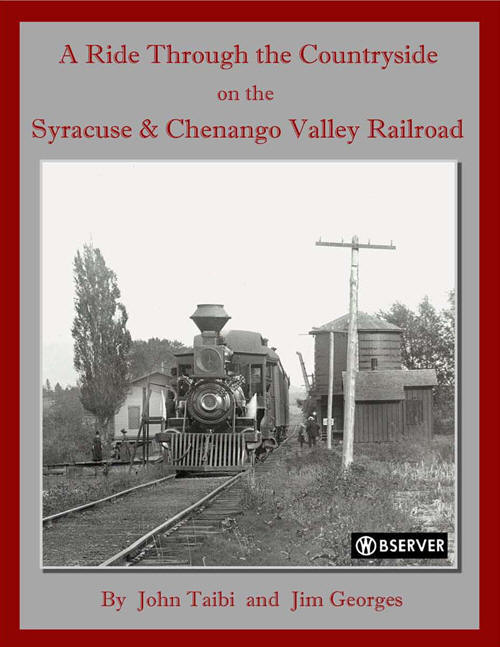
A Ride through the Countryside on the Syracuse & Chenango Valley Railroad is a story about the earliest days of the New York & Oswego Midland Railroad and its difficulties in building a planned route from Earlville to Syracuse. In 1866, the Midland vacated its plans to build the railroad along this corridor and adopted a route to Oswego via Oneida. The Syracuse & Chenango Valley Railroad was born two years later and eventually constructed its line along the route the Midland had earlier desired. Located nearly mid-way between Syracuse and Earlville was a tunnel and a heavy grade that only the Midland could have embraced had its mainline passed this upland countryside as originally planned.
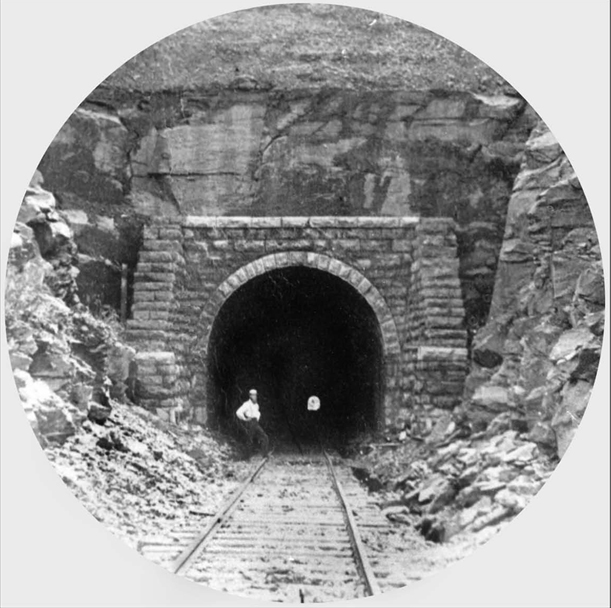
The newly completed S&CVRR tunnel in 1872.
Just like on the Midland – and later the NYO&WRy, the S&CVRR built a collection of wooden depot in all of the principle communities along its route. Other than a later ornate station built at Cazenovia, the Manlius depot was the largest example of the S&CV’s architectural designs.
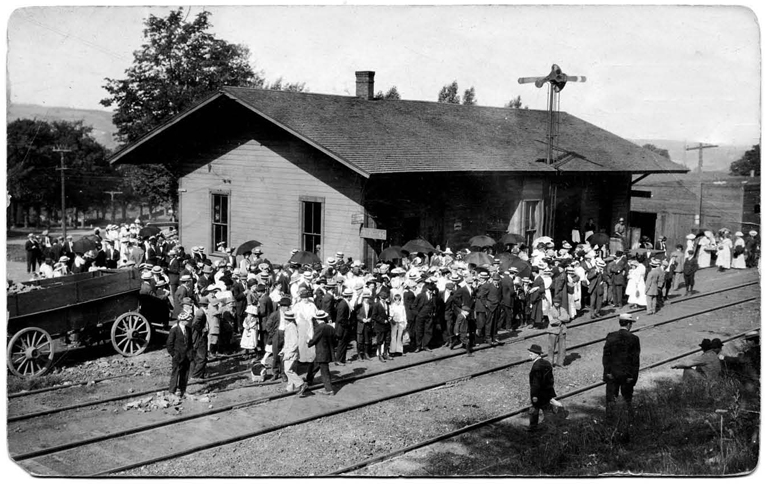
Around the turn-of-the-century, the Manlius depot is surrounded by folks waiting for a train to head off for a picnic. Where? At Sylvan Beach, of course !
Sometime during the glory years of railroading in central New York, an abbreviated Chenango Branch passenger train makes a stop at Lake View along the west shore of Cazenovia Lake. This was a popular flag stop for campers desiring to ride the train back and forth to Syracuse.
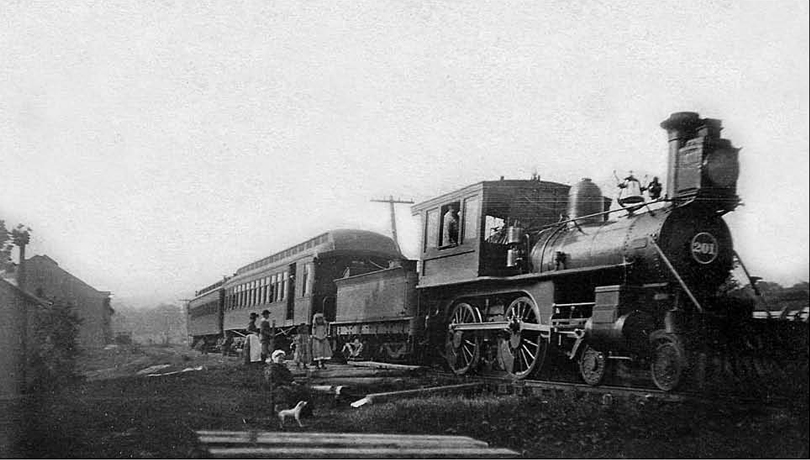
Although the S&CVRR was built with high expectations for success, it failed within its very first year. After several reorganizations, the line was acquired by the New York, West Shore & Buffalo Railway and –upon the New York Central acquisition of the West Shore – the old S&CV became the Chenango Branch of the New York Central. Regardless of ownership or corporate title, the Chenango became an important “bridge line” between its parent in Syracuse and the O&W at Earlville despite the two roads being arch competitors.
Beginning in 1937 – the same year the O&W went into receivership – the NYC began to dismantle the Chenango Branch so that even though it’s Earlville to Cazenovia trackage was abandoned that year, remnants of the line would remain in service until twenty years after the O&W’s demise.
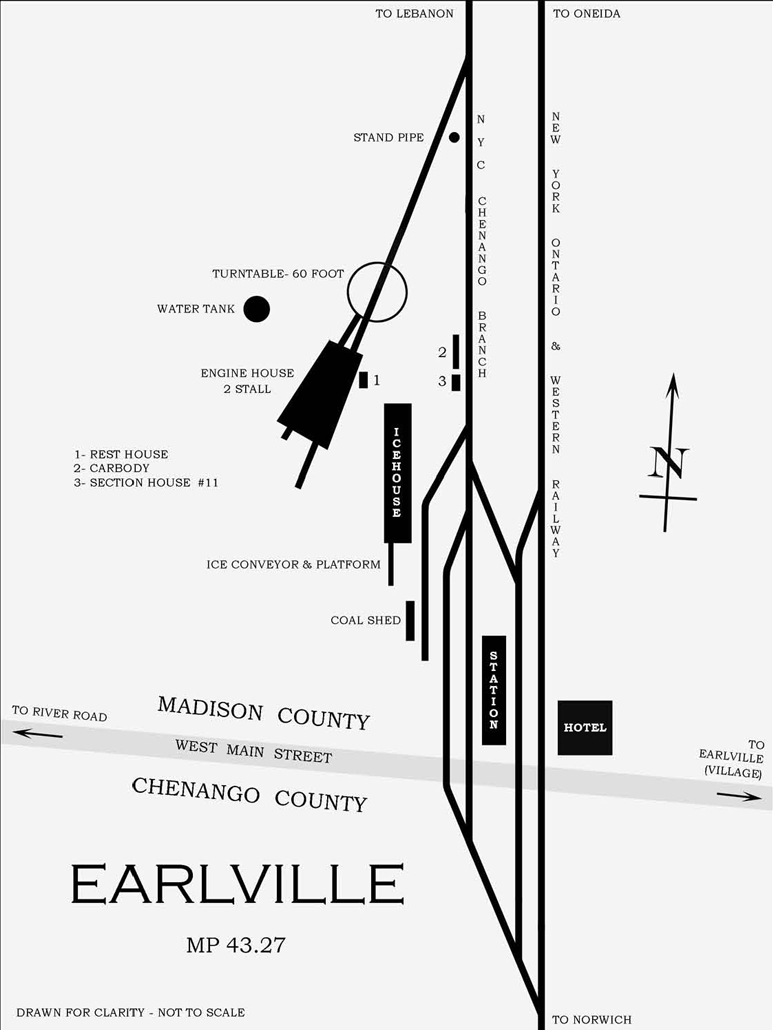
The story of the S&CVRR is not unlike that of the Ontario & Western and, although they ultimately suffered similar fates, they helped each other to remain vibrant in operation and brought new found prosperity to the region.
The history and operation of the Syracuse & Chenango Valley Railroad is comparable to – and compliments – that of the NYO&WRy.
Keep looking in your mailbox – this 2009 Observer will be there soon.